
Serving excellent coffee is an important part of creating a memorable customer experience. For cafés, restaurants, hotels, offices, and independent retailers, the quality of the coffee can influence customer satisfaction, repeat visits, and the overall reputation of a business.
Choosing the right supplier is equally important. Businesses need coffee that meets their quality standards, suits their customers, and can be sourced reliably at a reasonable cost.
Ethiopian Arabica coffee is an appealing option for businesses looking to offer distinctive flavours and a connection to one of the world’s most celebrated coffee traditions. Known for its floral aromas, bright acidity, fruit-forward notes, and natural sweetness, Ethiopian coffee offers a range of profiles for different brewing methods and customer preferences.
KafaCraft Coffee, based in Calgary, Alberta, celebrates Ethiopian coffee and its distinctive characteristics. Whether you operate an established café, manage a restaurant, or are developing a new coffee programme, understanding your options can help you make an informed purchasing decision.
Ethiopia is widely recognised as the birthplace of Arabica coffee and has a long-standing coffee culture. Its diverse growing regions produce beans with varied flavour characteristics, making Ethiopian coffee an attractive choice for specialty coffee programmes.
Depending on the region, processing method, and roast profile, Ethiopian coffee may feature:
These qualities give businesses an opportunity to offer customers something distinctive. Rather than relying exclusively on familiar, traditional coffee profiles, cafés and restaurants can introduce guests to different expressions of Ethiopian Arabica.
For specialty cafés, single-origin Ethiopian coffee can add variety to a filter coffee menu or espresso selection. Restaurants can use it to complement desserts or round out their beverage offerings. Retailers can also sell whole-bean coffee to customers who want to recreate a specialty coffee experience at home.
When selecting wholesale Ethiopian coffee beans in Canada, consider how the flavour profile fits your menu, equipment, target customers, and pricing strategy.
Yirgacheffe is one of Ethiopia’s best-known coffee-growing origins. It is particularly appreciated for its aromatic complexity, delicate sweetness, and bright, refreshing character.
Washed Yirgacheffe coffees often have floral aromas and citrus-forward flavours. Depending on the coffee, you may notice notes of jasmine, lemon, bergamot, and delicate fruit.
A typical washed Yirgacheffe profile may include:
The exact characteristics vary according to the coffee variety, growing conditions, processing method, and roasting approach.
Yirgacheffe can be a strong addition to a specialty coffee programme, particularly when a business wants to highlight origin and flavour rather than serve only a standard espresso blend.
It can work well for:
For customers who appreciate aromatic coffees with bright acidity, Yirgacheffe offers an opportunity to experience a different side of coffee.
KafaCraft Coffee celebrates the distinctive character of Ethiopian origins and welcomes enquiries from businesses interested in incorporating Ethiopian coffee into their offerings.
Sidamo, also known as Sidama, is another recognised Ethiopian coffee-growing origin. Its coffees can display a broad range of flavours depending on the variety, processing method, and roast profile.
Natural-processed Sidamo coffees, for example, may have pronounced fruit characteristics and a fuller, sweeter impression than some washed Ethiopian coffees.
Common flavour characteristics can include:
These characteristics vary between lots, so businesses should evaluate the specific coffee rather than assume every Sidamo offering will taste the same.
Selected Sidamo coffees can suit several beverage applications, including:
For espresso, the right combination of roast profile, grind size, dose, and extraction can help bring out the coffee’s sweetness and balance. In milk-based beverages, a suitable Sidamo coffee may offer fruit-forward flavours alongside the creaminess of milk.
For restaurants and cafés looking for a versatile coffee with a distinctive flavour profile, Sidamo is worth considering.
KafaCraft welcomes enquiries from businesses interested in discussing Ethiopian coffee options for their menus and beverage programmes.
Selecting high-quality green coffee beans is only one part of producing an excellent cup. Roasting plays a significant role in developing a coffee’s aroma, sweetness, acidity, and body.
The right roast profile should complement the characteristics of the beans and the intended brewing method. A roast that works well for filter coffee may not produce the same results when used for espresso.
Light roasting often preserves and highlights floral aromas, bright acidity, and distinctive origin characteristics.
It can be a suitable choice for specialty filter coffee and customers who enjoy delicate, vibrant flavours. Ethiopian coffees with floral and citrus notes can be particularly appealing when brewed using pour-over methods.
Medium roasting can provide a balance of sweetness, acidity, and body.
For cafés serving espresso alongside cappuccinos, lattes, and other milk-based beverages, a medium roast may be a useful starting point. The final result depends on the individual coffee and how it performs on the equipment.
Dark roasting emphasises deeper roasted flavours and a bolder overall character.
It may appeal to customers who prefer a traditional, roast-forward cup. However, darker roasting can make some of the more delicate origin characteristics less prominent.
Before ordering wholesale coffee, consider your brewing equipment, menu, customer preferences, and desired flavour profile. Where sampling is available, test the coffee using your own equipment before committing to a larger order.
KafaCraft Coffee focuses on Ethiopian Arabica coffee and thoughtful roasting that celebrates the characteristics of its origins.
Your coffee supplier influences more than the quality of the beans. Supply consistency, communication, pricing, packaging, and delivery arrangements can all affect day-to-day operations.
Before choosing a supplier, evaluate the following factors.
Ask where the coffee comes from, how it has been processed, and what flavour characteristics you can expect.
A knowledgeable supplier should be able to explain the differences between available coffees and help you identify options that suit your brewing methods.
Freshness matters when purchasing roasted coffee. Discuss roasting schedules, packaging formats, storage recommendations, and suitable usage periods.
Properly sealed, food-safe packaging and sensible stock rotation can help preserve quality. Buying quantities that match your consumption can also reduce the risk of keeping coffee in inventory for too long.
Businesses need dependable results from one order to the next. Significant changes in flavour or extraction can affect customer satisfaction and require adjustments to brewing recipes.
Ask how the supplier manages roast consistency and communicates changes when a new coffee lot becomes available.
Compare pricing alongside quality, packaging, delivery costs, customer service, and expected beverage margins.
The lowest price per kilogram does not necessarily represent the best value. A coffee that performs consistently and suits your customers may provide a better overall return.
Confirm minimum order quantities, lead times, delivery arrangements, shipping costs, and availability before entering a supply agreement.
These details are especially important for businesses that depend on a consistent coffee supply throughout the week.
A supplier who understands espresso preparation, filter brewing, and café operations can be a valuable resource.
Clear communication makes it easier to discuss coffee options, address supply questions, and select products that fit your business requirements.
KafaCraft Coffee understands that every business has different needs and welcomes enquiries from cafés, restaurants, offices, and retailers considering Ethiopian coffee.
Wholesale coffee beans prices vary according to origin, quality, green coffee costs, roasting, packaging, order volume, and supplier arrangements. Shipping and delivery requirements can also affect the final cost.
For this reason, businesses should evaluate coffee based on its cost per serving rather than focusing exclusively on the price per kilogram.
Consider a hypothetical café purchasing roasted coffee at CAD $30 per kilogram.
If the café uses an 18-gram dose for a double espresso, the calculation is as follows:
This calculation covers the coffee beans only. It excludes waste from dialling in equipment, milk, cups, labour, rent, equipment expenses, and other operating costs.
The $30 per kilogram figure is an illustrative example, not a published KafaCraft Coffee wholesale price.
Understanding the cost of each serving helps businesses assess whether a particular coffee fits their budget and menu pricing.
When comparing suppliers, consider:
A slightly more expensive coffee may be worthwhile if it improves the customer experience and suits your menu. The key is to evaluate the complete cost of serving it, rather than making a purchasing decision based on price alone.
For current options, minimum order quantities, and a quotation tailored to your business, contact KafaCraft Coffee directly.
Different businesses have different requirements. Your ideal coffee should suit the people you serve, the equipment you use, and the way your operation runs.
Specialty cafés may benefit from offering distinctive single-origin coffees such as washed Yirgacheffe or natural-processed Sidamo.
These coffees can add variety to a filter menu, create opportunities for coffee tastings, and appeal to customers interested in origin and flavour.
Restaurants should consider a coffee that complements the menu and can be prepared consistently during busy service periods.
A well-matched coffee can round out the dining experience, whether it is served after a meal or alongside dessert.
Workplaces often need coffee that is straightforward to prepare and suitable for a broad range of preferences.
Consider the available brewing equipment, daily consumption, storage space, and frequency of replenishment before selecting a wholesale option.
Retailers can consider packaged Ethiopian whole-bean coffee for customers who enjoy preparing coffee at home.
Clear origin information, appropriate packaging, and an accurate description of the flavour profile can help customers make informed purchasing decisions.
Hotels and other hospitality businesses need to balance coffee quality with preparation time, service consistency, inventory requirements, and guest expectations.
The most suitable option is one that fits the property’s beverage programme and can be supplied according to its operational needs.
Ultimately, the right coffee programme balances flavour, quality, customer expectations, operating requirements, and budget.
KafaCraft Coffee is a Calgary-based business inspired by Ethiopia, the birthplace of Arabica coffee. Its focus is on sharing the distinctive qualities of Ethiopian coffee and building meaningful connections through coffee.
Ethiopian coffee is known for its diverse flavour profiles and regional characteristics. KafaCraft celebrates origins such as Yirgacheffe and Sidamo, giving businesses an opportunity to enquire about coffees with distinctive characteristics.
Coffee selection and roasting influence the flavours that reach the cup. KafaCraft values thoughtful roasting and the qualities that make Ethiopian Arabica coffee distinctive.
Based in Calgary, Alberta, KafaCraft is committed to building relationships with customers and the local business community.
Businesses elsewhere in Canada are also welcome to enquire about potential wholesale arrangements. Shipping availability, delivery times, and costs should be confirmed directly with the company.
If you operate a café, restaurant, office, hotel, or retail business, consider discussing your requirements with KafaCraft.
You can share your preferred coffee style, estimated monthly consumption, brewing methods, and expected order quantities to help determine which available options may suit your operation.
For businesses looking for wholesale Ethiopian coffee beans in Calgary, KafaCraft Coffee is a potential supplier to contact when evaluating Ethiopian coffee options.
Visit KafaCraft Coffee to learn more and enquire about wholesale availability and pricing.
Once you have identified your business requirements, the purchasing process becomes easier to manage. The following steps can help you prepare for a conversation with a potential supplier.
Calculate your approximate monthly consumption. Consider the number of beverages served daily, average dose sizes, expected growth, and any coffee used for staff or testing.
This estimate can help you identify an appropriate order size.
Decide whether you want a floral and citrus-forward coffee, a sweeter and fruitier profile, or a bolder option for espresso and milk-based drinks.
Your existing menu and customer preferences can help guide this decision.
Share details about your business, brewing equipment, estimated order quantity, and preferred flavour characteristics.
Providing this information can make it easier to discuss suitable options.
Ask about available origins, roast profiles, packaging sizes, minimum order quantities, wholesale pricing, and delivery arrangements.
Confirm the details before placing an order so that the coffee and supply schedule fit your operational needs.
If sampling is available, test the coffee using your own equipment. Assess flavour, aroma, extraction, consistency, and suitability for your menu.
For espresso, test the coffee with the recipes and milk options you normally use. For filter coffee, evaluate how it performs with your preferred brewing method.
Plan orders around consumption, storage capacity, and freshness requirements.
A practical schedule can help prevent stock shortages without tying up too much money in inventory.
KafaCraft Coffee is a Calgary-based Ethiopian coffee business. Cafés, restaurants, offices, and retailers can contact the company through its website to discuss potential wholesale supply, available coffees, and pricing.
Washed Yirgacheffe coffees are often associated with floral aromas, bright citrus notes, and a clean finish. Natural-processed Sidamo coffees may offer sweeter fruit flavours, fuller body, and richer characteristics.
The precise flavour depends on the individual coffee, processing method, and roast profile.
Yes. Ethiopian Arabica can produce excellent espresso when the coffee, roast profile, grind size, and extraction recipe are appropriately matched.
Some coffees may work particularly well as single-origin espresso, while others may suit filter brewing or milk-based drinks.
Minimum order quantities depend on the supplier and purchasing arrangement. Contact KafaCraft Coffee directly to confirm available order sizes and requirements.
Yes. Ethiopian coffee can be used for drip brewing and may offer floral aromas, citrus notes, fruit-forward flavours, and natural sweetness.
The best choice depends on the restaurant’s equipment, menu, and customer preferences.
Businesses elsewhere in Canada are welcome to enquire about potential wholesale arrangements. Shipping availability, delivery times, costs, and order requirements should be confirmed directly with KafaCraft.
Store roasted coffee in sealed, food-safe packaging away from excessive heat, moisture, direct sunlight, and strong odours. Follow suitable stock rotation practices and the supplier’s storage recommendations to help maintain quality.
Choosing the right wholesale coffee can make a meaningful difference to a café, restaurant, or hospitality business. Beyond price, the decision involves flavour, freshness, consistency, brewing requirements, and the reliability of the supplier.
Ethiopian Arabica coffee offers a diverse range of possibilities. Yirgacheffe can bring floral aromas and bright citrus characteristics to a specialty coffee menu, while selected Sidamo coffees can provide fruit-forward flavours and versatility across espresso and filter brewing.
For businesses considering a new coffee programme or looking for an alternative to their current supplier, KafaCraft Coffee in Calgary offers an opportunity to discuss Ethiopian coffee options and potential wholesale arrangements.
Start by identifying your coffee requirements, comparing available profiles, and calculating the cost per serving. Then contact KafaCraft to ask about current offerings, order quantities, delivery arrangements, and wholesale pricing.
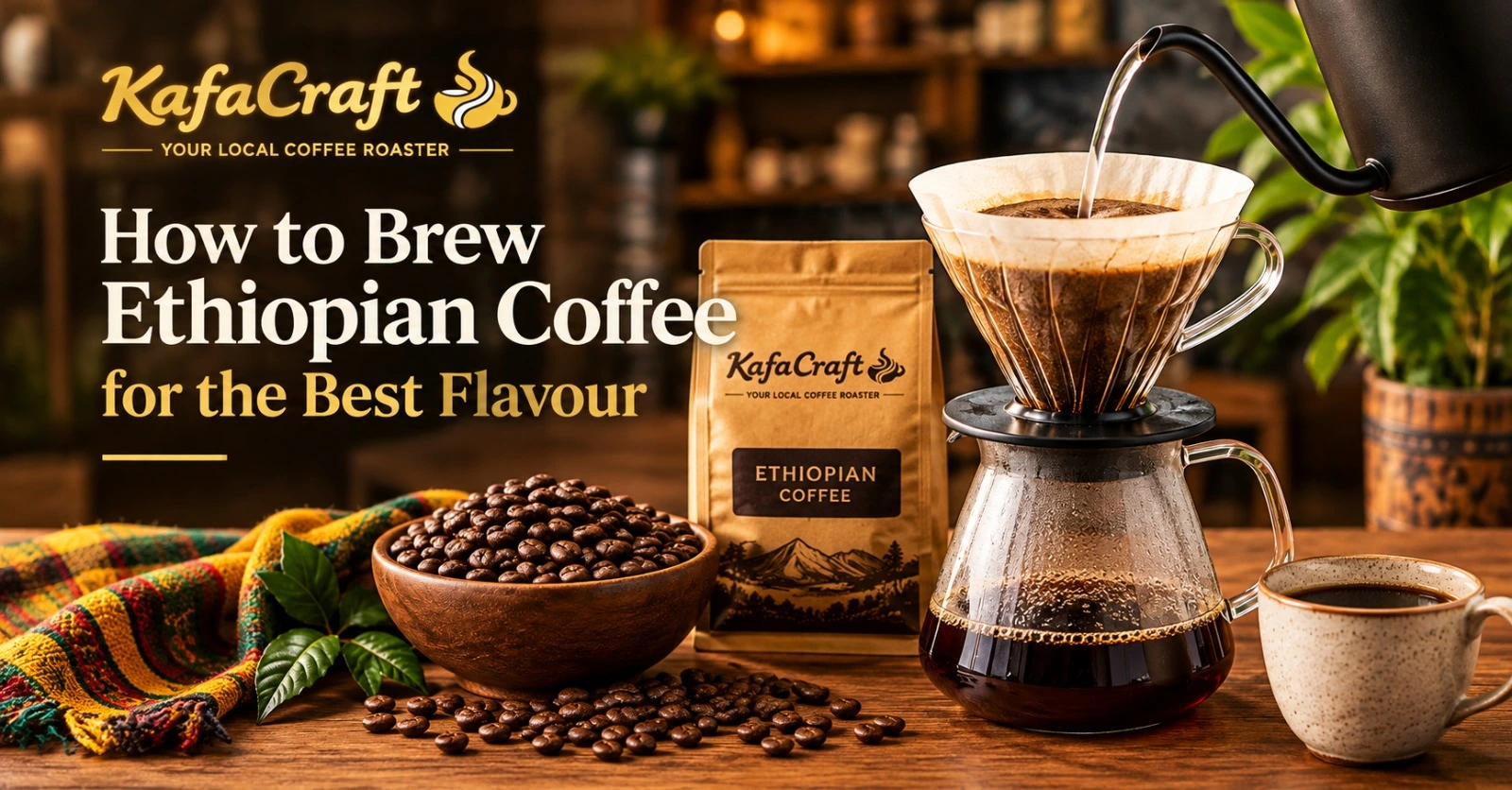
Ethiopian coffee is celebrated around the world for its floral aromas, vibrant fruit notes, natural sweetness and remarkable complexity. From the delicate citrus flavours of Yirgacheffe to the rich berry notes often associated with Sidamo, Ethiopian Arabica coffee offers a distinctive experience in every cup.
However, even exceptional coffee beans need the right brewing technique to bring out their best qualities. Water temperature, grind size, coffee-to-water ratio and brewing time all influence the final flavour.
At KafaCraft Coffee in Calgary, we believe brewing great coffee should be enjoyable and approachable. Whether you prefer a smooth pour-over, a rich French press, a concentrated espresso or the convenience of an automatic drip coffee maker, a few adjustments can help you get more from your Ethiopian coffee beans.
Ethiopia is the birthplace of Arabica coffee and home to an extraordinary diversity of coffee varieties. Its growing regions produce beans with distinctive flavour profiles influenced by variety, growing conditions, processing methods and roasting.
For a deeper look at what makes Ethiopian coffee unique, explore our guide to why Ethiopian coffee is among the best in the world.
Ethiopian Yirgacheffe coffee is often associated with:
Ethiopian Sidamo coffee may offer:
These characteristics vary between individual coffee lots. Washed coffees often emphasize clarity and delicate flavours, while naturally processed coffees can display more pronounced fruitiness and sweetness.
Understanding the characteristics of your beans can help you choose a brewing method that complements their flavour rather than overpowering it.
The quality of your coffee beans provides the foundation for a satisfying cup. Freshly ground, properly stored beans generally retain more of their aromatic qualities than coffee that has been ground and stored for an extended period.
Follow these practices for better results:
Freshly roasted coffee may also benefit from a short resting period before brewing, particularly for espresso. Excess carbon dioxide released by very fresh beans can interfere with extraction.
At KafaCraft Coffee, we value careful roasting that highlights the distinctive character of Ethiopian coffee.
The coffee-to-water ratio determines how concentrated your brewed coffee will be. Using consistent measurements makes it easier to adjust flavour and reproduce a successful recipe.
For most filter brewing methods, a ratio of 1:16 is an excellent starting point. This means using one gram of coffee for every 16 grams of water.
| Ground coffee | Water | Ratio |
| 15 g | 240 g | 1:16 |
| 20 g | 320 g | 1:16 |
| 25 g | 400 g | 1:16 |
| 30 g | 480 g | 1:16 |
If your coffee tastes too strong, try using slightly more water or reducing the amount of coffee. If it tastes weak, adjust the ratio or grind size.
Keep in mind that strength and extraction are different. A cup can taste weak because it is too diluted, or because the grounds have not released enough flavour during brewing. Making one adjustment at a time will help you identify the cause.
Pour-over brewing offers control over water flow and extraction, making it an excellent choice for highlighting the subtle aromas and clean finish of Ethiopian coffee.
Step 1: Heat the water. Bring fresh water to approximately 94°C.
Step 2: Grind the coffee. Grind 20 g of Ethiopian coffee to a medium-fine consistency.
Step 3: Rinse the filter. Place the paper filter inside the dripper and rinse it with hot water. Discard the rinse water.
Step 4: Add the coffee. Place the ground coffee inside the filter and gently level the coffee bed.
Step 5: Bloom the grounds. Pour approximately 40 g to 60 g of water over the coffee. Allow it to bloom for 30 to 45 seconds.
Step 6: Continue pouring. Slowly pour the remaining water in controlled circular movements until the total reaches 320 g.
Step 7: Let the coffee drain. Aim for a total brewing time of approximately 2 minutes 30 seconds to 3 minutes 30 seconds. Adjust your grind size and pouring technique as needed.
KafaCraft brewing tip: If washed Yirgacheffe tastes weak or sharply sour, try a slightly finer grind. If the coffee tastes excessively bitter or drying, a slightly coarser grind may help.
Expected flavour: Bright citrus, delicate floral notes, natural sweetness and a clean finish.
A French press allows more coffee oils and fine particles to enter the cup, creating a richer mouthfeel. It is a good option if you enjoy a more substantial brew with pronounced fruit flavours.
Avoid leaving the finished coffee in the French press for an extended period. Continued contact with the grounds can affect the flavour.
KafaCraft brewing tip: Natural Ethiopian coffees can taste wonderfully fruity when brewed in a French press. Experiment with grind size and steeping time to find a balance between sweetness and body.
Expected flavour: Rich fruit notes, a smooth body, balanced acidity and lingering sweetness.
Ethiopian coffee can produce excellent espresso with distinctive sweetness, bright acidity and aromatic complexity. The key is finding an extraction recipe that suits the specific beans and roast profile.
These measurements provide a starting point rather than a universal formula. Your grinder, espresso machine and coffee roast will influence the ideal settings.
KafaCraft brewing tip: A lighter-roasted Yirgacheffe may require a different extraction approach from a medium-roasted natural Sidamo. Adjust your recipe according to the beans rather than relying exclusively on standard brewing times.
Expected flavour: Concentrated sweetness, vibrant acidity and complex floral or fruity aromas.
An automatic drip coffee maker can produce a satisfying cup of Ethiopian coffee without requiring specialised equipment or extensive preparation. The most important factors are a suitable grind size, an appropriate coffee-to-water ratio and consistent brewing.
KafaCraft brewing tip: Avoid leaving brewed coffee on a hot warming plate for an extended period, as prolonged heat can negatively affect its flavour. Transfer the coffee to a thermal carafe if you intend to serve it over a longer period.
Expected flavour: A balanced, smooth cup with aromatic complexity and a pleasant finish.
The best brewing method depends on the flavour characteristics you want to emphasise and the equipment available to you.
For more guidance on matching Ethiopian beans with different brewing methods, read our guide to choosing the best Ethiopian coffee beans for your brewing method.
| Brewing method | Best starting choice | Flavour experience |
| Pour-over | Washed Yirgacheffe | Floral, citrusy and clean |
| French press | Natural Sidamo | Fruity, rich and full-bodied |
| Espresso | Ethiopian espresso roast | Concentrated, sweet and complex |
| Drip coffee maker | Yirgacheffe or Sidamo | Balanced, smooth and aromatic |
There is no single brewing method that works best for every Ethiopian coffee. A pour-over can highlight delicate floral aromas, while a French press can produce a richer mouthfeel. Espresso concentrates the coffee’s flavours, and an automatic drip machine offers a convenient way to enjoy Ethiopian beans every day.
Try different methods to determine which brings out the qualities you enjoy most.
Even high-quality beans can produce a disappointing cup when the brewing process is inconsistent. Understanding a few common mistakes can help you improve your results.
Grind size affects how quickly water extracts flavour from coffee grounds. A grind that is too fine can contribute to excessive extraction and bitterness, while an overly coarse grind may result in weak or under-extracted coffee.
Use a grind size suited to your brewing equipment and adjust it according to the taste of the finished cup.
Water temperature influences extraction. For many hot brewing methods, a starting range of 92°C to 96°C works well.
However, the ideal temperature depends on the roast level, coffee variety and brewing method. Experiment with small adjustments to find what works for your beans.
An inconsistent coffee-to-water ratio makes it difficult to reproduce a successful brew. Measuring by eye can lead to noticeable differences in strength and flavour.
Use a digital scale to measure your coffee and water accurately. A ratio of 1:16 is a reliable starting point for most filter brewing methods.
Coffee gradually loses its aroma and flavour after roasting, particularly once the beans are exposed to air and moisture.
Store whole beans in an airtight container in a cool, dry location. Grind them shortly before brewing to preserve their aromatic qualities.
Brewing time influences extraction, but it should not be considered in isolation. Grind size, water temperature, pouring technique and agitation also affect the result.
If your coffee tastes unpleasant, change one variable at a time. This approach makes it easier to identify what needs improvement without unnecessarily changing your entire recipe.
At KafaCraft Coffee, coffee is more than a drink. It is a connection to the origins, traditions and craftsmanship behind every cup.
Inspired by Ethiopia, the birthplace of Arabica coffee, KafaCraft celebrates the distinctive flavours and character of Ethiopian coffee. Our focus is on sharing this heritage with coffee enthusiasts who appreciate quality, care and the experience of a well-brewed cup.
Whether you enjoy preparing pour-over coffee at home, prefer the intensity of espresso or manage a café looking for distinctive coffee beans, Ethiopian coffee offers plenty of opportunities to refine your brewing experience.
The right beans, paired with a suitable brewing method, can make an everyday coffee ritual considerably more rewarding.
Visit KafaCraft.com to learn more about KafaCraft Coffee and its Ethiopian coffee offerings in Calgary.
Pour-over is an excellent starting point, particularly for washed Yirgacheffe. It can highlight the coffee’s floral aromas, bright citrus notes and clean finish. Use a medium-fine grind and a coffee-to-water ratio of 1:16, then adjust according to taste.
A temperature between 92°C and 96°C works well for many hot brewing methods. You may need to adjust the temperature according to the roast level, brewing equipment and desired flavour.
A ratio of 1:16 is a useful starting point for filter coffee. For example, use 20 g of coffee with 320 g of water. Espresso typically uses a more concentrated ratio, such as 1:2.
Yes. Ethiopian coffee can produce excellent espresso with floral, fruity or chocolate-like characteristics, depending on the beans and roast profile. Adjust the grind size, dose and extraction time to find the right balance.
Both can produce excellent results. Light roasts often emphasise delicate floral aromas, citrus and origin characteristics. Medium roasts can offer a balance of sweetness, acidity and body. The better option depends on your personal preferences and brewing method.
KafaCraft Coffee is based in Calgary and focuses on Ethiopian coffee, where you can buy coffee beans online and explore a selection of Ethiopian coffee offerings.
Great Ethiopian coffee begins with quality beans, but the brewing process brings their distinctive flavours to life. From the floral clarity of a pour-over to the fuller body of a French press, each method offers a different way to appreciate Ethiopian Arabica coffee.
Start with a reliable recipe, measure your ingredients carefully and adjust the grind size, water temperature and brewing time to suit your preferences.
At KafaCraft Coffee, we celebrate the character and craftsmanship of Ethiopian coffee, one cup at a time.
Ethiopian coffee has earned a special place in the world of specialty coffee, thanks to its remarkable flavour diversity, distinctive aromas, and centuries-old cultural traditions. From delicate floral notes to sweet berry flavours and refreshing citrus characteristics, Ethiopian coffee offers an experience that goes beyond an ordinary cup.
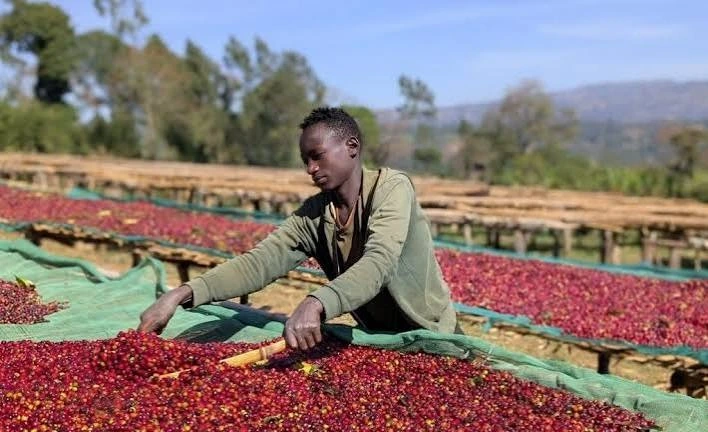
As the birthplace of Arabica coffee, Ethiopia has a rich coffee-growing heritage shaped by indigenous varieties, diverse landscapes, and traditional farming practices. Its coffee-growing regions produce beans with distinctive characteristics, making Ethiopian coffee a Favourite among specialty coffee enthusiasts, professional baristas, and roasters.
At KafaCraft Coffee, we celebrate this heritage by bringing authentic Ethiopian Arabica coffee to Calgary, Canada. Whether you prefer a bright pour-over, a balanced espresso, or a smooth cup to enjoy throughout the day, Ethiopian coffee offers plenty of variety to suit different preferences.
But what makes Ethiopian coffee stand out from other origins? Here are the qualities that have earned it recognition around the world.
Ethiopia holds a unique position in coffee history. The country’s southwestern highland forests are recognized as the natural home of Coffea arabica, the coffee species behind many of the world’s most celebrated specialty coffees. This rich heritage is also reflected in the quality and diversity of 100% Arabica Coffee Beans from Ethiopia.
One of the best-known stories associated with Ethiopian coffee is the legend of Kaldi, a young goatherd who supposedly noticed his goats becoming energetic after eating red coffee cherries. Although this story is folklore rather than verified history, it remains an enduring part of coffee culture.
From Ethiopia, coffee spread to Yemen and eventually reached other parts of the world. Today, Ethiopia continues to stand out for its extraordinary diversity of indigenous Arabica varieties and coffee-growing environments.
This heritage gives Ethiopian coffee a strong connection to the origins of one of the world’s most popular beverages. For coffee lovers, every cup offers an opportunity to appreciate the history and agricultural traditions behind the beans.
One of the defining characteristics of Ethiopian coffee is its wide range of flavour profiles. Unlike coffees that are primarily associated with chocolate or nutty notes, Ethiopian varieties can offer a more delicate and aromatic experience.
Depending on the origin, processing method, and roast profile, Ethiopian coffee may feature:
These tasting notes develop through the coffee’s variety, growing environment, processing, and roasting. They do not necessarily indicate that flavourings have been added to the beans.
The diversity of Ethiopian coffee makes it particularly appealing to people who enjoy tasting the differences between coffee-growing regions. One variety may offer a light, floral cup, while another delivers a fruitier, sweeter, and fuller-bodied experience.
This range of characteristics is one reason Ethiopian coffee remains a compelling choice for anyone interested in specialty coffee.
Yirgacheffe is one of Ethiopia’s best-known coffee-growing areas, internationally recognized for producing aromatic Arabica coffee with a delicate and refined character.
Washed Yirgacheffe coffee is particularly appreciated for its clean flavour, bright acidity, and floral complexity. Common tasting notes include jasmine, lemon, and bergamot, often accompanied by a light to medium body and an elegant finish.
These qualities make Yirgacheffe an excellent option for pour-over brewing. Methods such as the Hario V60 or Chemex can help highlight the coffee’s aromatic qualities and subtle flavour differences.
For those who prefer coffee that feels refreshing rather than heavy, Yirgacheffe is worth trying. Its delicate profile allows the natural characteristics of the beans to take center stage.
At KafaCraft Coffee, Yirgacheffe represents the sophistication and diversity that make Ethiopian specialty coffee so distinctive.
Sidamo, also commonly called Sidama, is another celebrated Ethiopian coffee origin. Coffees from this region can offer a broad range of characteristics, from floral and citrus-forward profiles to sweeter, fruitier cups.
Depending on the specific coffee lot and processing method, Sidamo coffee may feature:
Natural-processed Sidamo coffee can be especially appealing to people who enjoy pronounced fruit flavours. During natural processing, whole coffee cherries are dried with the fruit surrounding the beans, allowing the process to contribute to a sweeter and often fuller-bodied cup.
Selected Sidamo coffees can also work well for espresso and specialty coffee beverages. Their combination of sweetness, fruitiness, and body can create an interesting alternative to more traditional espresso profiles.
Comparing Sidamo with Yirgacheffe is an excellent way to appreciate the variety found within Ethiopian coffee. Although both originate in Ethiopia, their individual characteristics can produce distinctly different drinking experiences.
The environment in which coffee grows plays an important role in the characteristics of the final cup. Many Ethiopian specialty coffees come from highland regions where elevation, temperature, rainfall, soil, and local growing conditions influence the development of coffee cherries.
Cooler temperatures at higher elevations can slow cherry maturation, potentially contributing to the development of complex flavour characteristics. Ethiopia’s diverse landscapes also support a wide range of indigenous Arabica varieties.
However, elevation alone does not guarantee exceptional coffee. Farming practices, harvesting methods, processing, storage, and roasting all influence the final quality.
The combination of Ethiopia’s natural diversity and generations of coffee-growing knowledge helps explain why its coffee is so varied and widely appreciated.
For specialty coffee enthusiasts, these differences create an opportunity to experience how growing conditions influence aroma, acidity, sweetness, and body.
Coffee processing begins after the cherries are harvested. The method used to remove the fruit and prepare the beans for drying can significantly influence the coffee’s final flavour profile.
Two common methods used for Ethiopian coffee are washed and natural processing.
In washed processing, the outer fruit is removed before the beans are dried. This method often produces a clean and clearly defined flavour profile.
Washed Ethiopian coffees may emphasize:
Washed Yirgacheffe is a well-known example of a coffee appreciated for its clarity and elegance. It is particularly suitable for brewing methods that highlight delicate aromas.
In natural processing, whole coffee cherries are dried with the fruit still surrounding the beans. This approach can contribute to more pronounced fruit characteristics and a richer impression of sweetness.
Natural Ethiopian coffees may feature:
Natural-processed Sidamo coffees are a good example of the fruit-forward profiles that this method can produce.
Neither method is automatically better than the other. The result depends on the quality of the cherries, the care taken during processing, and the subsequent roasting. The best choice ultimately comes down to the flavour experience you enjoy.
Coffee has a deep cultural significance in Ethiopia. Beyond being a daily beverage, it plays an important role in hospitality, social gatherings, and community life.
One of the most recognizable expressions of this tradition is the Ethiopian coffee ceremony.
The ceremony commonly involves roasting green coffee beans, grinding them, and brewing the coffee in a traditional clay pot called a jebena. The freshly prepared coffee is then served to family members, friends, and guests.
The process encourages people to slow down, share conversation, and spend time together. Coffee becomes a reason to gather rather than simply something to drink before moving on to the next task.
This tradition reflects a belief that sits at the heart of KafaCraft Coffee: coffee is more than a beverage. It is a connection between people, cultures, and shared experiences.
By celebrating Ethiopian coffee, we aim to honor the heritage behind the beans while bringing people together through an appreciation for quality coffee.
Even excellent green coffee beans require careful roasting to reach their full potential. Roasting transforms the beans through heat, developing the aromas, sweetness, acidity, and body that define the finished cup.
Different roast levels can highlight different aspects of Ethiopian coffee.
Light roast: Often preserves and emphasizes floral aromas, lively acidity, and the distinctive characteristics associated with the coffee’s origin.
Medium roast: Can offer a balance of sweetness, body, and origin-specific flavours, making it a versatile option for different brewing methods.
Dark roast: Develops deeper roasted flavours and a heavier impression of body, with roast characteristics becoming more prominent.
The right roast depends on the individual beans and the intended brewing method. A delicate floral coffee may benefit from a roast that preserves its aromatic qualities, while another coffee may work well with a profile that develops more body and sweetness.
At KafaCraft Coffee, we value thoughtful roasting that respects the character of Ethiopian Arabica beans. Our goal is to celebrate their natural qualities while delivering a balanced and enjoyable coffee experience.
For coffee lovers in Calgary, KafaCraft Coffee offers an opportunity to appreciate the distinctive qualities of Ethiopian coffee and the traditions behind it.
Our approach is guided by three principles.
We celebrate Ethiopian Arabica coffee and the heritage of the regions where it grows. Each origin offers a different perspective on Ethiopia’s remarkable coffee diversity.
From selecting beans to developing suitable roasting profiles, attention to detail matters. We believe that thoughtful preparation helps reveal the characteristics that make each coffee distinctive.
Coffee has a way of bringing people together. KafaCraft aims to reflect the warmth of Ethiopian coffee traditions by creating meaningful experiences for people who appreciate good coffee and the stories behind it.
Whether you are trying Ethiopian coffee for the first time or already enjoy its floral and fruit-forward profiles, KafaCraft welcomes you to experience the diversity of Ethiopian coffee in Calgary.
Ethiopian specialty coffee is not only an option for home brewing. It can also help cafés, restaurants, and other businesses introduce customers to distinctive coffee experiences.
Adding Ethiopian coffee to a menu can create opportunities to:
The versatility of Ethiopian coffee makes it suitable for a range of menus and brewing approaches. The best selection depends on the business’s customers, preferred brewing methods, and desired flavour profile.
KafaCraft welcomes inquiries from cafés, restaurants, offices, and businesses interested in Ethiopian coffee and potential wholesale partnerships.
If your business is looking for wholesale Ethiopian coffee beans in Calgary or elsewhere in Canada, visit our website to connect with KafaCraft and discuss your requirements.
Ethiopian coffee is highly regarded in the specialty coffee industry for its diverse Arabica varieties, distinctive flavours, and rich cultural heritage. Whether it is the best coffee depends on personal preference, but its complexity and aromatic qualities make it a Favourite among many coffee enthusiasts.
Yirgacheffe is known for its floral aromas, citrus notes, bright acidity, and elegant finish. Washed Yirgacheffe is particularly popular among pour-over and filter coffee enthusiasts who appreciate delicate, clearly defined flavours.
Ethiopia is the natural home of Arabica coffee and is widely known for its Arabica production. However, buyers should check the product label to confirm whether a particular coffee is 100% Arabica, single-origin, or part of a blend.
Yes. Ethiopian coffee can make excellent espresso. Depending on the beans and roast profile, it may deliver bright fruit notes, floral complexity, balanced sweetness, or deeper chocolate-like characteristics.
KafaCraft Coffee is a Calgary-based coffee brand focused on Ethiopian coffee. Visit kafacraft to learn more about its coffee offerings and find out how to connect with the brand.
From Ethiopia’s highlands to coffee cups in Calgary, Ethiopian coffee carries a story shaped by natural diversity, agricultural traditions, and a culture of hospitality.
Its distinctive flavour profiles, celebrated origins, and traditional processing methods make it an excellent choice for people who want more from their daily coffee. Whether you prefer the floral elegance of Yirgacheffe or the fruit-forward character of Sidamo, Ethiopian coffee offers a variety of experiences worth appreciating.
At KafaCraft Coffee, we are proud to celebrate Ethiopia’s coffee heritage and share our appreciation for Ethiopian Arabica coffee with Calgary and beyond.
Visit kafacraft to learn more about KafaCraft, explore our coffee offerings, and connect with us about retail or wholesale opportunities.
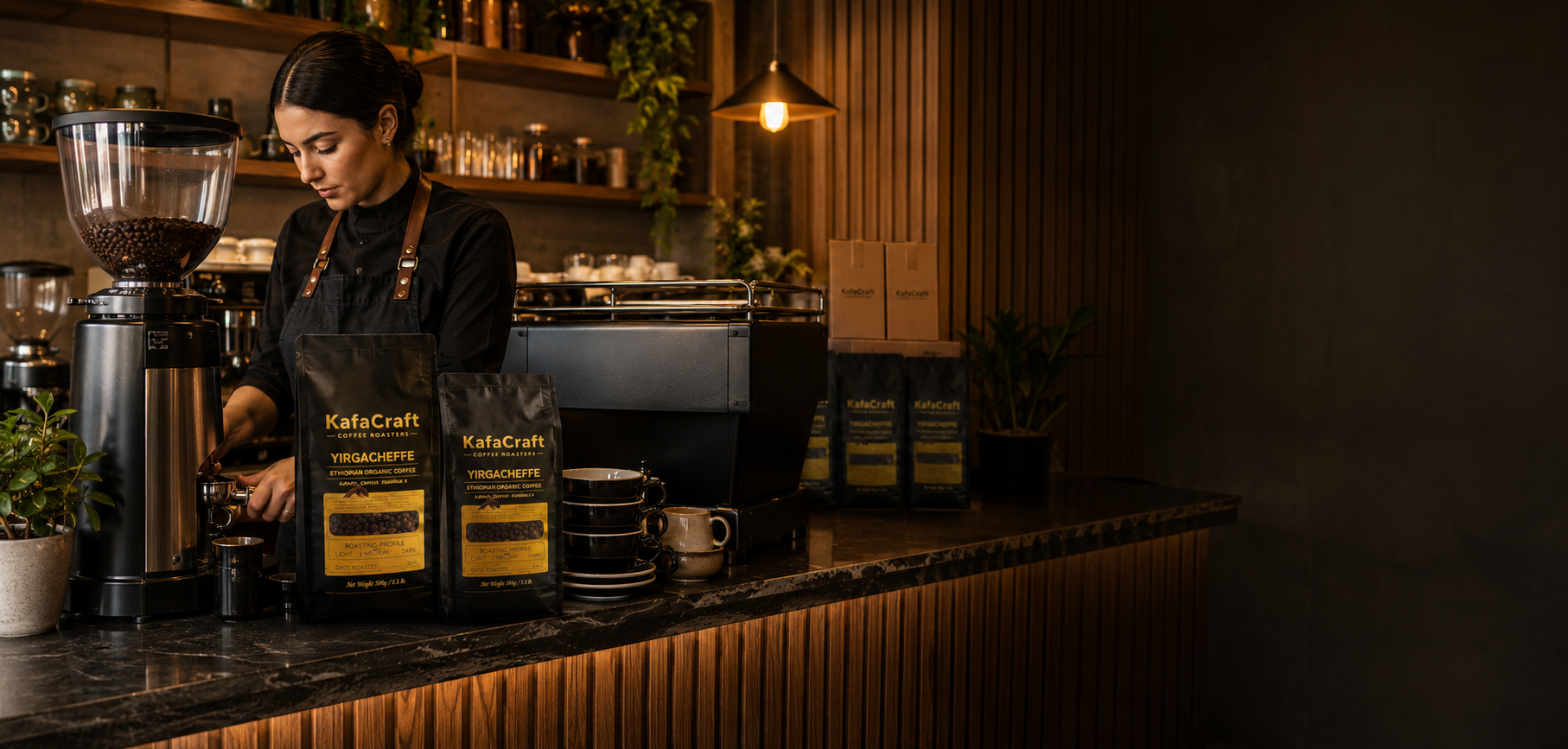
Ethiopia is known for producing some of the most interesting coffees in the world. Two names that often come up when people talk about Ethiopian coffee are Yirgacheffe and Sidamo. Both are known for their distinct flavors, rich history, and connection to the coffee-growing regions of southern Ethiopia.
But what really separates them?
If you are comparing Yirgacheffe vs Sidamo, the biggest differences usually come down to where the coffee is grown, the flavor profile, the aroma, and the way the beans are processed. While both can produce bright and flavorful cups, they can taste quite different.
Let us look at what makes each one special and which coffee may be a better fit for your taste.
The first difference is their place of origin.
Yirgacheffe coffee comes from the Yirgacheffe area in southern Ethiopia. The area is known for high growing elevations, fertile soil, and small coffee farms. These conditions help create beans with bright acidity and delicate flavors.
Ethiopian Yirgacheffe coffee is especially known for floral aromas, citrus notes, and a clean finish. Many coffee drinkers enjoy it because the cup can feel light, fresh, and refined.
Sidamo coffee comes from the Sidamo area of southern Ethiopia. The name Sidamo is widely used in the coffee industry for coffees from this part of the country. The region has many different growing areas, so Sidamo coffees can show a wider range of flavors.
This means that Yirgacheffe is generally associated with a more specific growing area, while Sidamo can refer to coffees from a broader area.
Yirgacheffe is often a good choice for people who enjoy bright and delicate coffee.
A typical Yirgacheffe cup may have notes of:
The exact flavor depends on the farm, growing conditions, coffee variety, processing method, and roast level. Still, floral and citrus characteristics are common reasons people choose Yirgacheffe.
The acidity can be noticeable, but good Yirgacheffe coffee should not simply taste sour. The acidity usually works with the sweetness and aroma to create a clean and balanced cup.
If you enjoy coffee that feels fresh and aromatic, Yirgacheffe may be a great choice.
Sidamo coffee can offer a little more variety in the cup.
Depending on the specific coffee, you may notice flavors such as:
Some Sidamo coffees are bright and fruity, while others can be richer and sweeter. This range makes Sidamo appealing to people who want Ethiopian coffee but prefer a slightly fuller or more rounded flavor.
Sidamo can also have a pleasant sweetness that makes it easy to enjoy as a daily coffee.
So, how can you tell the difference when you have both coffees in front of you?
Yirgacheffe is often associated with a lighter and more floral cup. Citrus flavors and delicate aromas can stand out, especially when the coffee is lightly roasted.
Sidamo tends to offer a broader flavor range. Depending on its growing area and processing style, it may taste fruity, sweet, floral, or slightly chocolatey.
Here is a simple comparison:
| Feature | Yirgacheffe | Sidamo |
| Common flavor notes | Citrus, floral, tea, peach | Berry, fruit, citrus, chocolate |
| Aroma | Floral and delicate | Fruity, sweet, and floral |
| Acidity | Bright and lively | Medium to bright |
| Body | Light to medium | Medium |
| Overall character | Clean and delicate | Sweet and balanced |
These are general characteristics. Ethiopian coffee can vary considerably from one producer, washing station, or harvest to another.
Yes. Processing can have a major effect on the final cup.
Two coffees from the same region can taste very different when they are processed differently.
Washed coffees often have a clean and bright flavor. This style can make citrus and floral characteristics easier to notice.
Natural coffees are dried with the fruit still around the coffee seed. This can create stronger fruit flavors and a sweeter, heavier cup.
This is one reason you may taste two Yirgacheffe coffees that seem completely different. The region matters, but processing also plays a major role.
The same is true for Sidamo.
When choosing between the two, do not look only at the regional name. Check the processing method as well.
Yirgacheffe is usually the better choice if you enjoy bright acidity.
Its citrus and floral qualities can give the coffee a lively character. This can make it especially enjoyable as a pour over or other brewing method that highlights delicate flavors.
Sidamo can also have noticeable acidity, particularly when the coffee comes from a high elevation and has a light roast. However, many Sidamo coffees balance that acidity with fruit sweetness and a fuller body.
If you prefer a sharp and bright cup, Yirgacheffe may be the better option.
If you prefer a fruity cup with more sweetness and body, Sidamo may suit you better.
Smoothness is partly a matter of personal taste.
Yirgacheffe can feel very smooth because of its clean finish and delicate body. Its lighter character makes it popular with people who enjoy tea-like coffee.
Sidamo can feel smoother in a different way. Its sweetness and medium body can make the cup feel rounder and richer.
Roasting also matters. A darker roast can reduce some of the bright characteristics of either coffee while bringing out deeper flavors.
For this reason, the same coffee can taste very different depending on how it is roasted and brewed.
| Choose Yirgacheffe if you like: | Choose Sidamo if you like: |
|---|---|
| Floral aromas | Fruity flavors |
| Citrus flavors | Berry notes |
| Bright acidity | More sweetness |
| Light to medium body | Medium body |
| Clean finishes | Balanced acidity |
| Delicate coffee | A richer cup |
There is no winner between the two. They simply offer different experiences.
If you want to explore more options before choosing, our guide to the Best Ethiopian Coffee Beans can help you choose the right Ethiopian coffee for your preferred brewing method.
Some coffee drinkers prefer Yirgacheffe because of its floral and citrus character. Others prefer Sidamo because of its fruit sweetness and broader flavor range.
The roast level can change how these coffees taste.
A light roast usually preserves more of the original character of the bean. With Yirgacheffe, this can highlight floral and citrus notes. With Sidamo, it can bring out fruit and bright acidity.
A medium roast can provide a little more body while keeping many of the coffee’s natural flavors.
A dark roast brings out deeper roasted flavors and can reduce some of the delicate regional characteristics.
If you are buying either coffee for the first time, a light or medium roast can be a good place to start. It allows you to notice more of what makes the beans different.
That depends on your daily coffee preference.
If you want something light, fresh, and aromatic in the morning, Yirgacheffe can be an excellent choice.
If you want something fruity, sweet, and a little fuller, Sidamo may work better.
Both can be enjoyed every day, but your brewing method can also make a difference.
Pour over brewing is a popular choice for highlighting the bright and delicate qualities of Ethiopian coffee. French press and other brewing methods can create a fuller cup that brings more attention to body and sweetness.
Yirgacheffe and Sidamo are both excellent examples of Ethiopian coffee, but they are not exactly the same.
Yirgacheffe is generally known for its floral aroma, citrus character, bright acidity, and clean finish. Sidamo can offer more variety, with flavors that range from berries and citrus to chocolate and sweet fruit.
The growing area is important, but it is only part of the story. Coffee variety, elevation, processing, roasting, and brewing all influence what ends up in your cup.
If you enjoy delicate and floral coffee, start with Yirgacheffe. If you prefer fruity sweetness and a fuller character, give Sidamo a try.
And if you are not sure which one you prefer, try both. A side-by-side tasting is one of the easiest ways to understand the difference. Brew them using the same method, take a sip of each, and pay attention to the aroma, acidity, sweetness, body, and finish.
That simple comparison may tell you more about your coffee preference than any description can.

Ethiopian coffee has a special place in the coffee world. It is known for bright flavors, floral aromas, fruity notes, and a character that can change quite a bit depending on where the coffee comes from and how it is processed.
But choosing Ethiopian coffee is not only about picking a region or reading tasting notes on a bag. Your brewing method matters too.
The coffee that tastes wonderful in a pour over may not give you the same experience in a French press or espresso machine. The grind, roast level, processing method, and brewing style all affect what ends up in your cup.
If you’re looking for the best Ethiopian coffee beans in Canada, the right choice starts with understanding how you like to brew your coffee.
Here is how to match Ethiopian coffee with some of the most common brewing methods.
Before thinking about equipment, think about what you want your coffee to taste like.
Ethiopian coffees can offer a wide range of flavors. Some are light and floral, while others have strong fruit notes and a sweeter taste. Some have a cleaner finish, while others feel richer and heavier in the mouth.
Washed Ethiopian coffees are often a good choice when you want a clean cup with noticeable floral, citrus, or tea-like qualities. Natural processed coffees can have stronger fruit flavors and more sweetness.
Your personal taste should guide your choice.
If you like bright and delicate coffee, a lighter roasted Ethiopian coffee may be a good starting point. If you prefer a fuller cup, you may enjoy a natural processed coffee or a slightly darker roast.
The brewing method then helps bring those qualities forward.
Pour over is one of the best ways to enjoy the delicate qualities of Ethiopian coffee. The method gives you control over the water flow, brewing time, temperature, and coffee-to-water ratio.
That control can help bring out floral aromas, fruit flavors, and bright acidity.
For Ethiopian coffee for pour over, look for a light to medium roast, especially if you enjoy clean and complex flavors. Washed Yirgacheffe is a popular choice because its floral and citrus qualities can work very well with this method. Natural coffees from areas such as Sidamo or Guji can also work well if you prefer sweeter fruit flavors.
A medium-fine grind is a good place to start. Water around 195 to 205 degrees Fahrenheit is also commonly used for pour over brewing. A coffee to water ratio near 1 to 16 gives you a useful starting point.
The bloom is important too. Pour a small amount of water over the grounds and let them sit for about 30 to 45 seconds before continuing. This gives the coffee grounds time to release trapped gas and helps create more even extraction.
If your coffee tastes sour or weak, try a slightly finer grind. If it tastes bitter or dry, try a slightly coarser grind.
Small changes can make a noticeable difference.
The French press gives Ethiopian coffee a very different character.
Instead of filtering the coffee through paper, the French press allows more oils and fine particles to remain in the finished drink. This creates a heavier body and a richer mouthfeel.
If you enjoy coffee that feels smooth and full, Ethiopian beans with strong fruit or chocolate notes can work well here.
A medium or medium-coarse grind is a good starting point. You can also choose a natural processed Ethiopian coffee if you want more fruit and sweetness.
The French press can soften some of the sharpness that you may notice in a bright pour over. This makes it a useful option for people who enjoy Ethiopian coffee but prefer a rounder cup.
The key is not to grind the coffee too finely. Fine grounds can make the coffee muddy and may leave you with more bitterness.
A traditional drip coffee maker is convenient, especially when you want several cups without spending a lot of time preparing each one.
You do not need to use a special coffee bean for a drip machine. Ethiopian coffee can work very well with this method.
For everyday drinking, consider a medium roast Ethiopian coffee. It can provide a good balance between brightness, sweetness, and body.
If you like floral and citrus flavors, try a washed coffee. If you want more fruit and sweetness, a natural processed coffee may be a better fit.
A medium grind usually works well for standard drip coffee makers.
The most important thing is freshness. Freshly roasted coffee and freshly ground beans can make a noticeable difference in aroma and flavor. KafaCraft, for example, highlights small batch roasting and freshness as part of its approach to Ethiopian coffee.
Ethiopian coffee can also be used for espresso, but the result can be very different from a pour over.
Espresso uses pressure and a short brewing time. Because of this, the coffee can taste more concentrated.
If you enjoy fruit-forward espresso, a natural Ethiopian coffee can give you strong berry and sweet fruit notes. A washed coffee can produce a cleaner espresso with floral and citrus qualities.
Roast level is also important.
A light roast can preserve more of the coffee’s original character, but it can be harder to dial in on an espresso machine. A medium roast may provide a more balanced starting point and can be easier to work with.
Use a fine grind designed for espresso and adjust it based on how quickly the coffee flows through the machine.
If the espresso tastes too sharp, you may need to adjust your grind, dose, or extraction time. Do not assume that changing the coffee is always the answer.
Your equipment can help determine which Ethiopian coffee makes sense for you.
If you own a V60 or another pour over brewer, you have a lot of control over extraction. This makes it a good setup for lighter Ethiopian coffees with floral and fruit notes.
If you use a French press, consider beans that offer sweetness and body.
If you use a drip coffee maker every morning, a balanced medium roast may be easier to enjoy on a regular basis.
For espresso, consider how comfortable you are with adjusting your grind and brewing settings.
There is no single brewing method that is right for everyone. The best choice is the one that fits both your taste and your routine.
Processing is another important part of choosing Ethiopian coffee.
Washed coffee is processed by removing the fruit from the coffee cherry before drying. This often produces a cleaner cup where floral, citrus, and other delicate notes are easier to notice.
Natural coffee is dried with the fruit still around the coffee seed. This can produce stronger fruit flavors, more sweetness, and a heavier body.
Neither method is automatically better.
Think about the type of cup you want.
For a clean and bright pour over, a washed Ethiopian coffee can be a great starting point. For a sweeter and fruitier French press or espresso, a natural coffee may be worth trying.
Roast level can change how Ethiopian coffee behaves in your brewer.
Light roasts tend to preserve more of the coffee’s natural character. They can highlight acidity, floral notes, and fruit flavors.
Medium roasts usually offer more balance. They can provide sweetness and body while still allowing some of the Ethiopian character to come through.
Dark roasts create stronger roasted flavors and more bitterness. They can work for people who prefer a bold coffee, but they may cover some of the delicate qualities that make Ethiopian coffee interesting in the first place.
If you are buying Ethiopian coffee for the first time, a light or medium roast is often a sensible place to start.
If you have a coffee grinder at home, buying whole beans is usually a good idea.
Grinding your coffee just before brewing helps preserve its aroma. This is especially useful with Ethiopian coffee because floral and fruit notes are a major part of its appeal.
You can also change the grind size based on your brewing method.
Use a medium-fine grind for pour over, a coarser grind for French press, and a fine grind for espresso.
Having control over the grind makes it easier to adjust your coffee when the first cup is not quite right.
Coffee recommendations can give you a starting point, but your own taste matters most.
You may prefer a natural Guji in a French press even if someone else recommends a washed Yirgacheffe for the same method. You may enjoy a medium roast in your pour over even though lighter roasts are often recommended.
That is completely fine.
When choosing the best Ethiopian coffee beans, think about three simple things: what you like to taste, how you brew, and how much control you want over the process.
If you enjoy bright and floral coffee, start with a washed Ethiopian coffee and try it as a pour over. If you want fruit and sweetness, consider a natural processed coffee. If you prefer a fuller cup, try the French press.
There is plenty of room to adjust from there.
Here is an easy way to narrow down your choices:
For pour over: Choose a light or medium roast. Washed Yirgacheffe is a strong starting point for floral and citrus flavors. Natural Ethiopian coffees are a good choice when you want more fruit and sweetness.
For French press: Look for medium roast coffee with good body. Natural processed beans can work particularly well if you enjoy rich fruit flavors.
For drip coffee: Choose a medium roast for an easy balance of sweetness, body, and brightness.
For espresso: Try a medium roast if you want an easier starting point. Natural coffees can offer bold fruit flavors, while washed coffees can provide a cleaner and brighter espresso.
The goal is simple. Choose a coffee that suits both your brewing method and your taste.
Once you find that combination, Ethiopian coffee can become much more enjoyable to brew and drink every day.
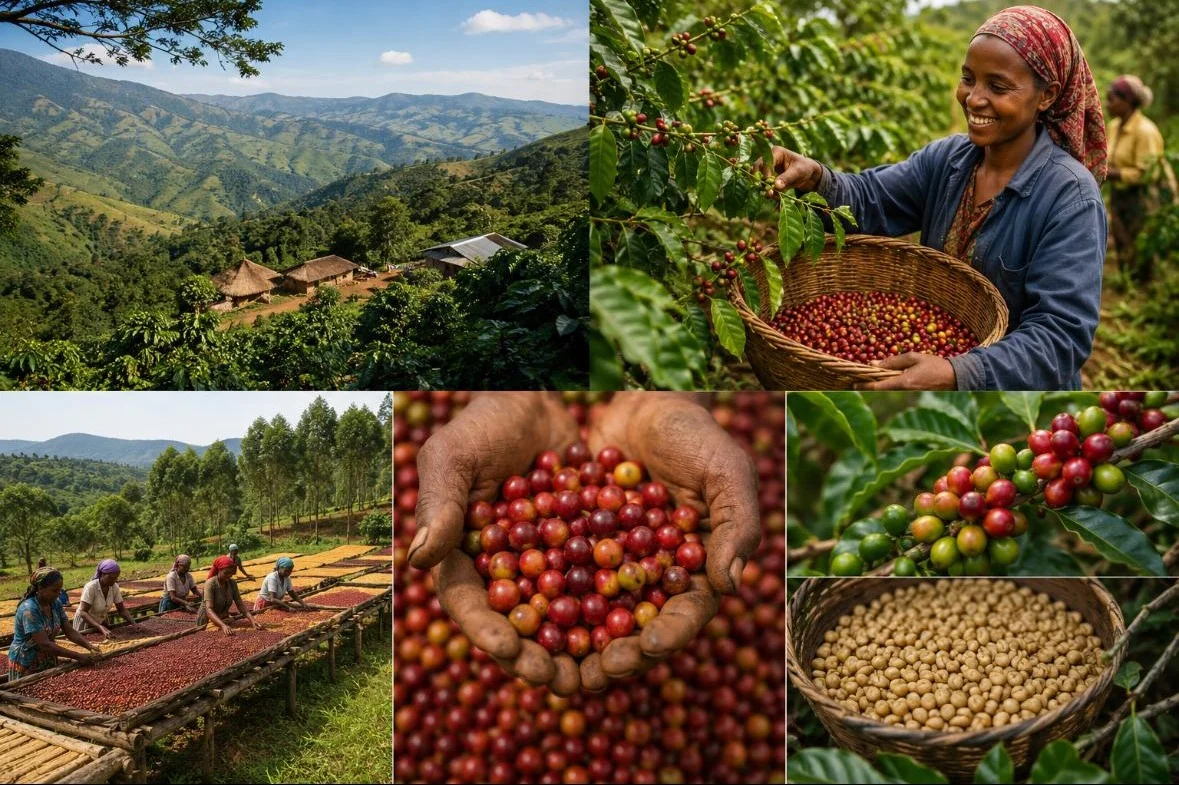
For cafes and restaurants, coffee is more than another item on the menu. It is part of the customer experience. A good cup can bring customers back, while poor quality coffee can affect how they view the entire dining experience.
Ethiopian coffee is a strong choice for businesses that want to serve coffee with a distinct taste and character. Ethiopia is known for producing beans with bright flavors, floral aromas, fruity notes, and a wide range of profiles.
However, buying coffee in large quantities requires more thought than simply choosing a bag that tastes good. Cafes and restaurants need to consider bean quality, freshness, roast level, consistency, pricing, supply, and the needs of their customers.
If you are considering wholesale Ethiopian coffee beans for your business, this guide can help you make a practical buying decision.
Ethiopian coffee has a reputation for having a distinctive character. Depending on the region and processing method, the coffee can have floral, citrus, fruity, sweet, or tea-like qualities.
This gives cafes and restaurants more ways to create a coffee menu that feels different from standard commercial coffee.
For example, a cafe may want a coffee with bright acidity and floral notes for customers who enjoy lighter coffee. A restaurant may prefer a richer roast that works well with breakfast dishes, desserts, or milk-based drinks.
The key is to choose a coffee that fits your menu and your customers rather than selecting beans based only on their origin.
Before contacting a wholesale supplier, decide what kind of coffee you want to serve.
Think about questions such as:
Ethiopian beans can work well across different styles, but the right choice depends on how you plan to serve them.
A lighter roast may bring out delicate floral and fruit notes. A medium roast can provide a balance between acidity, sweetness, and body. A darker roast can offer deeper roasted flavors that some customers prefer in espresso drinks.
Ethiopia has several well-known coffee-growing areas, and beans from different regions can taste very different.
Yirgacheffe is often associated with floral aromas, citrus notes, sweetness, and a clean cup. Sidamo coffees can offer fruity, sweet, and balanced flavors. Harrar is also known for its distinctive character and can provide a richer and more complex cup.
When buying wholesale Ethiopian coffee beans, ask the supplier where the beans come from.
Knowing the region gives you a better idea of what to expect in the cup. It can also help your staff explain the coffee to customers.
You do not need a complicated description on the menu. A simple note such as floral, citrus, fruity, sweet, or smooth can be enough to help customers make a choice.
Freshness should be one of the main points on your buying checklist.
Coffee beans change over time after roasting. Aroma and flavor can gradually fade, especially when coffee is stored poorly or sits for too long.
For a cafe or restaurant, this matters because you may be serving many cups every day. Fresh beans can help you maintain a more consistent taste from one service to the next.
Ask potential suppliers when the beans are roasted and how they are packaged. It is also useful to understand how long the supplier recommends keeping the beans after roasting.
Small batch roasting can be useful for businesses because it can support freshness and consistency. KafaCraft, for example, highlights small batch roasting as part of its approach to maintaining aroma and taste.
A coffee may taste excellent once, but your business needs it to taste good every time.
Consistency is especially important for cafes because customers often return expecting the same drink they enjoyed during their last visit.
Before placing a large order, request a sample if the supplier offers one. Brew it using the same equipment and method you plan to use in your business.
Pay attention to:
This testing process can help you avoid committing to a large quantity of coffee that does not suit your menu.
Buying wholesale can reduce the cost per unit, but ordering too much can create another problem.
If your business does not use the coffee quickly enough, the beans may lose freshness before you finish the supply.
Start by estimating your weekly coffee use.
For example, consider how many cups you serve each day and how much coffee you use for each drink. You should also account for waste, staff drinks, testing, and changes in customer traffic.
Once you have a reasonable estimate, you can discuss order sizes with your supplier.
The best wholesale arrangement is not always the one with the largest order. It is the one that gives your business a good balance between price, freshness, and reliable supply.
Price is naturally important when you are buying coffee for a business.
However, the lowest price is not always the best value.
A cheaper coffee may seem attractive at first, but if customers do not enjoy it, you may lose repeat business. A slightly higher quality coffee may provide more value if it improves the customer experience and supports stronger sales.
When comparing suppliers, look at the complete offer.
Ask about:
This gives you a clearer picture of your actual cost.
KafaCraft presents wholesale coffee as a supply option for cafes, restaurants, offices, and other businesses, with pricing and bulk order support available through its wholesale program.
Your relationship with a coffee supplier can become an important part of your daily operation.
If your supplier is difficult to reach or cannot maintain a reliable supply, even great coffee can become a problem.
Look for a supplier that communicates clearly and understands the needs of business customers.
A good supplier should be able to answer basic questions about the coffee, including where it comes from, how it is roasted, how it should be stored, and what type of brewing it suits.
Reliable supply is also important when your cafe or restaurant becomes busier.
You do not want to build a popular coffee menu around a product that may suddenly become difficult to order.
Coffee should make sense alongside the food and drinks you already serve.
A bright Ethiopian coffee may pair nicely with pastries, fruit-based desserts, or lighter breakfast dishes. A fuller coffee may work better with chocolate desserts or heavier meals.
You can also use Ethiopian coffee as a way to give customers something they may not find at every cafe.
The menu description does not need to be complicated.
Instead of using technical coffee terms that most customers may not understand, focus on simple descriptions.
For example:
Yirgacheffe: Floral, citrus, sweet, and clean.
Sidamo: Fruity, smooth, sweet, and balanced.
The exact flavor profile will depend on the specific coffee, roast, and preparation method, so use descriptions that match the beans you are actually serving.
Your staff can have a major influence on how customers experience your coffee.
They do not need to become coffee experts. They simply need to understand the basics.
Teach them where the coffee comes from, what it tastes like, how it is prepared, and which drinks it works well with.
A server who can confidently say, “This is an Ethiopian coffee with floral and citrus notes,” can make the product feel more interesting without giving the customer a long explanation.
This can also create a better connection between the coffee and the rest of the menu.
Buying quality coffee is only part of the process. You also need to protect that quality after the beans arrive.
Keep coffee away from heat, moisture, direct sunlight, and strong odors. Use an appropriate airtight container and avoid opening large quantities unnecessarily.
Your storage system should also match your order size.
If you are ordering more coffee than you can use in a reasonable period, even good storage cannot completely solve the freshness problem.
This is another reason why it is important to work with a supplier that can support a regular ordering schedule.
Some cafes and restaurants want to sell coffee under their own brand.
If this is part of your plan, ask whether the supplier offers private label services.
Private label coffee can give a business another way to build its brand. Customers can purchase the same coffee they enjoyed at the cafe and take it home.
This can create an additional source of revenue while keeping the cafe brand connected to the coffee.
Not every business needs private label coffee, but it can be worth considering if retail sales are part of your long-term plan.
Choosing wholesale Ethiopian coffee beans should not be treated as a one-time purchasing decision.
Your coffee needs may change as your business grows.
You may add new drinks, increase your daily customer count, open another location, or change your menu. Your supplier should be able to support those changes.
Start with a coffee that matches your customers and menu. Test it carefully. Track customer feedback and sales. Then adjust your order size or coffee selection as needed.
A good wholesale relationship should make your coffee program easier to manage, not more complicated.
For cafes and restaurants, Ethiopian coffee can bring something special to the menu. Its wide range of flavors gives businesses the opportunity to offer coffee with a clear sense of character.
The most important part is choosing carefully.
Look at the origin, flavor profile, roast level, freshness, consistency, pricing, storage needs, and supplier reliability. Most importantly, test the coffee in the way your customers will actually drink it.
When you find beans that taste good, perform well, fit your menu, and can be supplied consistently, you have a much stronger foundation for your coffee program.
For businesses considering wholesale Ethiopian coffee beans, the goal should be simple: serve a quality cup that customers enjoy and want to order again.